
Market
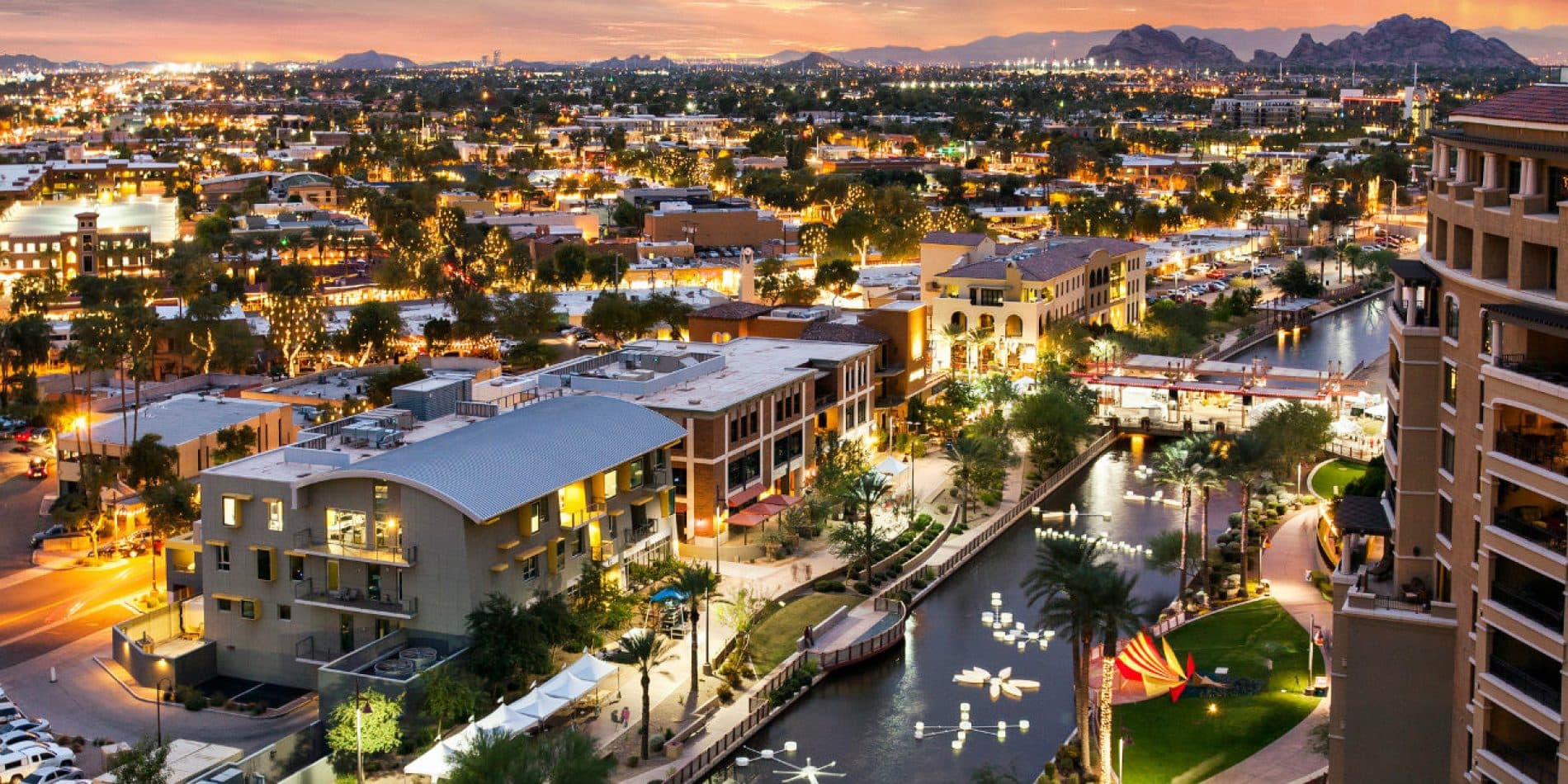
Scottsdale
Scottsdale, AZ investors benefit from exchange coordination that understands local market dynamics and nationwide replacement property options. We coordinate exchanges across Old Town, North Scottsdale, and surrounding areas.
Scottsdale's diverse property types and strong market fundamentals create exchange opportunities. Our nationwide identification support helps Scottsdale investors find replacement properties across the country while maintaining local coordination.
Local Market
Scottsdale Investor Insights
Scottsdale trades differently than the rest of the Phoenix metro. Land is tight, resort product carries a premium, and the buyer pool has no patience for a commodity deal. An investor bringing exchange proceeds into this submarket needs a plan built for a smaller, pricier pool of replacements, not the volume game that works out west in Surprise or Buckeye.
Old Town Retail Runs on Tourist Traffic, Not Rooftop Counts
Old Town Scottsdale retail and restaurant space leases against foot traffic from the entertainment district, the art walk crowd, and resort guests staying nearby, not against a fixed radius of rooftops the way a suburban strip center does. Seasonality matters more here. A slow August can look nothing like a busy February, and a buyer should ask for at least twelve months of trailing revenue by month before trusting a seller's pro forma.
Net lease restaurant space along 5th Avenue and Main Street draws steady exchange interest because those tenants tend to sign longer terms than the bar and nightlife concepts around them, and longer terms make the income easier to underwrite.
The Airpark Carries the Office and Flex Volume
Most of the office and flex deal flow in Scottsdale happens north of Old Town, around Scottsdale Airport and the Hayden Road corridor, in what locals call the Airpark. It behaves closer to a normal office market than the tourist core does. Replacement candidates a buyer will actually see on the market include:
- Multi-tenant office buildings along Hayden Road and Redfield Road
- Flex and light industrial space serving avionics and aerospace tenants near the airport
- Medical and dental office near the Shea corridor hospital campuses and Mayo Clinic Scottsdale
- Corporate build-to-suit and creative office space in Kierland and DC Ranch
- Small-bay industrial condos favored by owner-users exiting other parts of the Valley
Resort and Hospitality Income Needs a Different Underwriting Model
Resort and boutique hotel product along the Camelback corridor and near the golf resorts draws exchange buyers who already understand hospitality operations, because income depends on management quality, group and event business, and a seasonal occupancy swing that a passive net lease investor is not used to modeling. A buyer new to hospitality should bring in an operator or asset manager before closing, not after.
Land underneath aging resort product is sometimes worth more than the building's current income, so a full teardown-and-rebuild scenario belongs in the analysis even when the seller is only marketing the going-concern hotel.
Small Parcels Push Buyers Toward Fewer, Pricier Candidates
Because land here runs multiples of what it costs in Mesa or Peoria, a Scottsdale exchange dollar buys less square footage, and the replacement search skews toward smaller, higher-quality assets instead of one large building. That is fine for a buyer trading down in size but up in quality. It is a problem for a buyer who needs to replace a large industrial building dollar-for-dollar and expects to find an equivalent parcel inside city limits.
I have seen this catch out sellers moving from a big warehouse elsewhere in the Valley into what they assumed would be a similarly sized Scottsdale asset. The math rarely works that way here, and a buyer needs to accept a smaller footprint, a different asset class, or a DST allocation to make the exchange proceeds land somewhere reasonable.
Why the Identification List Needs to Stay Flexible
Given how thin the market is for any single asset type, I tell Scottsdale-bound buyers to keep their identification list mixed across office, retail, and DST candidates rather than betting everything on one building that might fall out of contract. The 200% rule earns its keep here more than in a deeper market, because it lets a buyer name several realistic backups instead of three long shots.
The forty-five day identification window moves fast in a market this thin. A buyer who waits until week three to start touring Airpark office or resort-adjacent land is usually the one scrambling to sign a lender preflight letter on a property they toured once, at night, from a parking lot.
FAQ
Frequently Asked Questions
Why does seasonality matter so much for Old Town retail and restaurant replacement property?
Tourist and event traffic drives Old Town revenue more than a fixed residential base does, so monthly income can swing sharply between peak season and summer. A buyer should review at least a full year of trailing monthly revenue before relying on any annualized number a seller presents.
Is the Scottsdale Airpark a realistic office replacement for an exchange coming from another metro?
Yes, for a buyer comfortable with a smaller multi-tenant building rather than a large single-tenant campus. Office and flex product near the airport trades more often than anything in Old Town or the resort corridor, which makes it easier to build a real identification list.
How should hospitality income near the golf resorts be evaluated differently?
It should be underwritten on management quality, group and event bookings, and seasonal occupancy rather than a flat lease rate, since there is no long-term tenant carrying the income. Land value under an older resort building is also worth modeling separately from the going-concern operation.
Should I widen my identification list given how few large parcels trade in Scottsdale?
Generally yes. The 200% rule lets a buyer name office, retail, and DST candidates together rather than staking the exchange on three specific buildings in a market where inventory turns over slowly.
Can 1031 Exchange of Phoenix confirm that a specific Scottsdale property qualifies for my exchange?
No. This service coordinates identification, scheduling, and communication between the investor and their qualified intermediary, lender, and title company. Whether a given property and transaction qualify as like-kind is a determination made by the investor's own tax advisor and QI.
Services
Available Services
Get turnkey 1031 exchange solutions for a planned sale in Scottsdale, AZ, including direct, net-lease, and DST replacement-property choices plus the independent professional handoffs the transaction requires.
View all servicesBuild a Scottsdale Sale-to-Replacement Plan
Share the planned sale, request a free property list, or talk through direct and passive replacement options with a Phoenix 1031 expert.