
Market
Tempe
Tempe, AZ investors benefit from exchange coordination that understands local market dynamics and nationwide replacement property options. We coordinate exchanges across Tempe's diverse neighborhoods and business districts.
Tempe's strong market fundamentals and diverse property types create exchange opportunities. Our nationwide identification support helps Tempe investors find replacement properties across the country while maintaining local coordination.
Local Market
Tempe Investor Insights
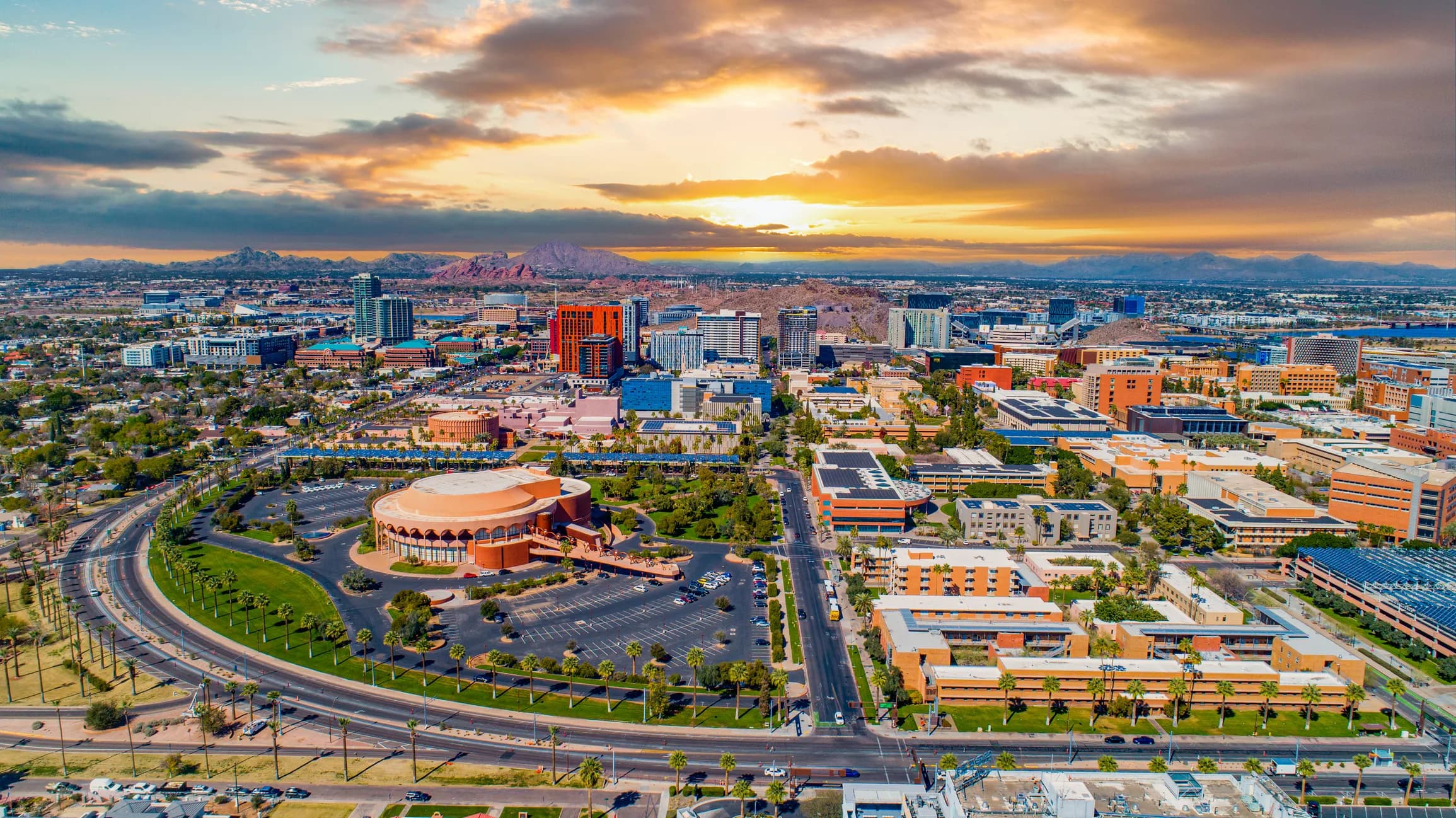
Tempe is a university town wrapped around a corporate office corridor, and the two markets barely touch. Student housing and Mill Avenue retail run on the academic calendar. The office towers around Tempe Town Lake run on corporate lease terms that have nothing to do with a fall semester. A buyer coming into this submarket needs to know which of those two markets they are actually stepping into.
Student Housing Fills on the Academic Calendar, Not the Lease Calendar
Purpose-built student housing near Arizona State's main campus leases up hard in the spring for the following fall and can sit soft the rest of the year, which makes trailing twelve-month income a poor stand-in for forward income if a buyer is closing mid-cycle. Occupancy figures need a month-by-month breakdown, not an annual average, before anyone relies on them.
Older apartment stock a few blocks off campus that mixes students with young professionals tends to hold value better through a slow leasing season than a purpose-built student tower does, since it is not entirely dependent on one buyer pool. A seller marketing a purpose-built tower should also disclose any university enrollment changes that could affect next fall's pre-lease pace, since a buyer's lender will ask about it regardless.
Town Lake Office Runs on Corporate Timelines
The office towers around Tempe Town Lake, home to large corporate campuses, trade on multi-year lease terms and credit-tenant underwriting that looks a lot like downtown Phoenix office, not like a suburban strip. A buyer replacing into this corridor should expect institutional-grade competition and pricing that reflects the waterfront location, and should budget for a longer diligence period than a smaller flex building would need. Parking structure capacity and ride-share pickup congestion around event nights at the lake are worth a site visit before assuming a building's amenity package is actually convenient for tenants.
Mill Avenue and South Tempe Carry Very Different Retail Risk
Retail along Mill Avenue depends on foot traffic from students, ASU events, and downtown visitors, which makes weekday summer revenue a real underwriting question. Retail farther south, along Rural Road and near the ASU Research Park, serves a broader commuter and resident base and behaves more like ordinary suburban retail. Treating these two corridors the same in a pro forma is a common mistake I see buyers make.
Game-day and event-week traffic can inflate a single month's numbers on Mill Avenue dramatically, so a buyer should pull the full academic-year calendar and match it against reported revenue before trusting any single strong month as representative.
Industrial and Flex Space Trades Quietly Along Priest and Southern
Smaller industrial and flex buildings near Priest Drive and Southern Avenue attract less attention than the office towers or student housing, but they trade steadily to owner-users and small investors who want proximity to Sky Harbor and the 202 corridor without paying Scottsdale-level land prices. This stock rarely shows up in broad market searches, so a buyer should ask a local broker directly rather than relying on listing portals alone.
Because so much of this stock changes hands through relationships rather than open marketing, a buyer with a hard identification deadline should start those broker conversations in week one, not week three, of the forty-five day window.
Match the Identification Strategy to Which Tempe You Are Buying
A seller exiting student housing usually wants to identify a mix of multifamily, self-storage, and DST candidates, since dependable core multifamily can be harder to find at a matching price. A seller exiting Town Lake office typically has an easier time finding a like-for-like replacement, because credit-tenant office trades more consistently across the Valley than student housing does.
A seller exiting a Priest Drive flex building sits somewhere in between. Comparable buildings do trade, but not often, so a buyer working that identification list should widen the search to nearby Chandler and south Phoenix rather than restricting it to Tempe city limits alone.
FAQ
Frequently Asked Questions
Why does student housing near ASU need a different income analysis than regular apartments?
Leasing activity concentrates heavily in the spring for the following fall term, so a trailing twelve-month average can mask a weak summer or a strong pre-lease season. A month-by-month breakdown gives a much more accurate picture before an exchange deadline forces a decision.
Is office near Tempe Town Lake priced like the rest of the Phoenix office market?
No. Waterfront location and large corporate anchor tenants push pricing and buyer competition closer to downtown Phoenix levels than to a typical suburban office park, so a buyer should expect institutional-level diligence and a longer closing runway.
Should Mill Avenue retail and South Tempe retail be underwritten the same way?
No. Mill Avenue depends on student and event foot traffic that thins out in the summer, while retail near the ASU Research Park and Rural Road serves a steadier commuter and resident base. Applying one pro forma template to both is a common and avoidable mistake.
How many replacement properties should I identify when exiting student housing?
Many exchangers use the 200% rule here, naming multifamily, self-storage, and DST candidates together, since core apartment product that matches a student housing sale price is not always easy to find on the first pass.
Can 1031 Exchange of Phoenix tell me whether my Tempe replacement property qualifies as like-kind?
No. This service coordinates the identification timeline, lender scheduling, and communication among the investor's advisors. Whether a specific property qualifies is determined by the investor's own tax advisor and qualified intermediary.
Services
Available Services
Get turnkey 1031 exchange solutions for a planned sale in Tempe, AZ, including direct, net-lease, and DST replacement-property choices plus the independent professional handoffs the transaction requires.
View all servicesBuild a Tempe Sale-to-Replacement Plan
Share the planned sale, request a free property list, or talk through direct and passive replacement options with a Phoenix 1031 expert.